
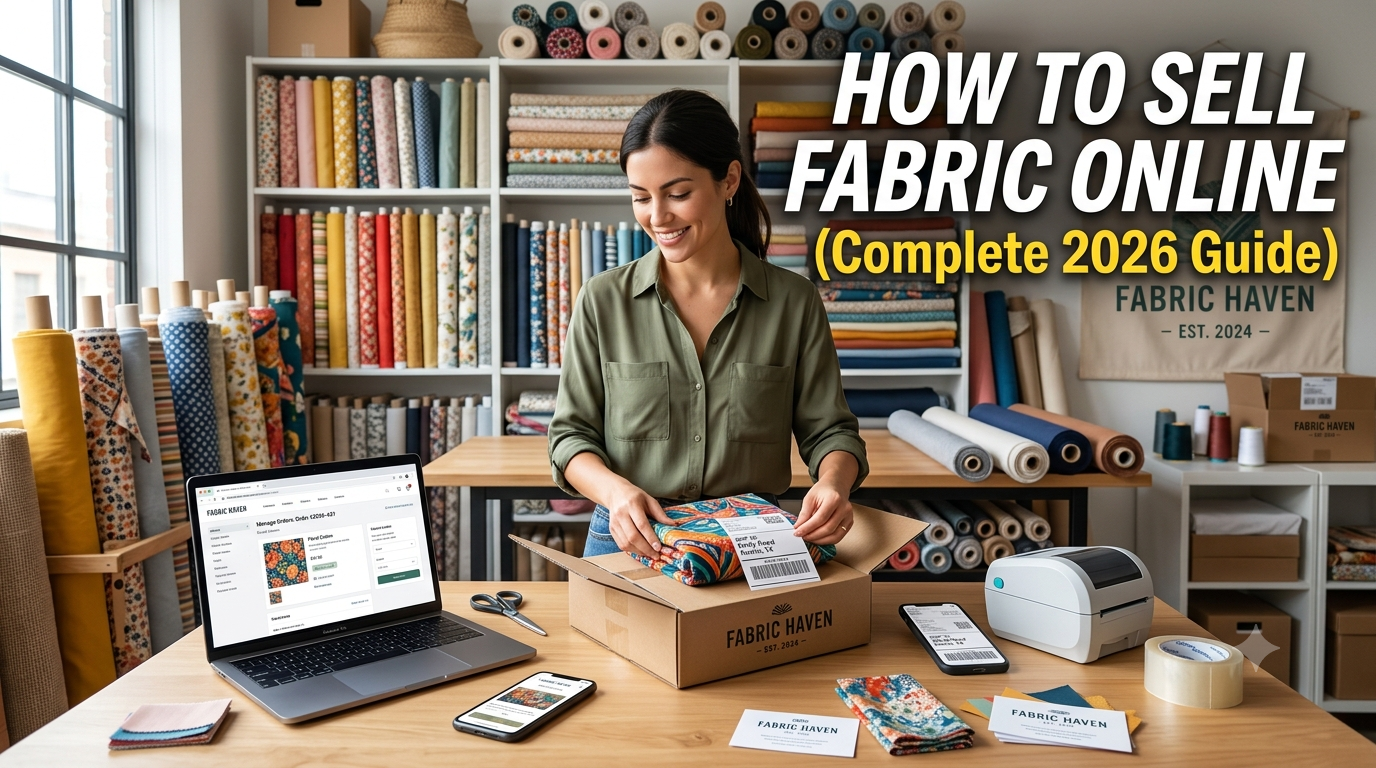
Selling fabric online has become increasingly popular as more customers choose to browse, compare and purchase materials without visiting a physical shop. Whether you specialise in dressmaking fabrics, quilting cotton, upholstery textiles, curtain materials or premium designer collections, an online store allows you to reach customers far beyond your local area.
Unlike many ecommerce products, however, fabric presents some unique challenges. Customers rarely buy a fixed quantity—they usually need a specific length for a project. They also want confidence that colours, textures and materials match their expectations before committing to a purchase.
In this guide, we’ll explore how to start selling fabric online, how to build trust with customers, and the tools that can help you create a successful online fabric business.
Is selling fabric online a good business?
The online fabric market continues to grow as hobbyists, fashion designers, upholsterers, schools and small businesses increasingly purchase materials online.
Customers often search for:
- Dress fabrics
- Quilting fabrics
- Upholstery materials
- Curtain fabrics
- Linen
- Cotton
- Jersey
- Velvet
- Waterproof fabrics
- Sustainable textiles
Many buyers know exactly what material they’re looking for before they begin searching, making search engine optimisation (SEO) particularly valuable for fabric retailers.
Whether you’re opening a dedicated fabric shop or expanding an existing bricks-and-mortar business, selling online allows customers to browse your catalogue at any time.
Decide what type of fabric you’ll sell
One of the biggest decisions is choosing your niche.
Some retailers focus on a single market, while others stock thousands of different fabrics.
Popular categories include:
- Dressmaking fabrics
- Quilting cotton
- Upholstery fabric
- Curtain fabric
- Outdoor fabrics
- Stretch fabrics
- Faux leather
- Linen
- Wool
- Craft fabrics
- Felt
- Haberdashery and sewing accessories
A clearly defined niche often makes it easier to build authority, rank in search engines and attract loyal customers.
Choosing an ecommerce platform
There are many platforms available for selling fabric online.
When comparing them, consider:
- Product catalogue size
- SEO features
- Payment options
- Inventory management
- Shipping flexibility
- Support for selling by length
- Long-term running costs
Many independent fabric retailers choose WooCommerce because it gives them complete control over their website while supporting a wide range of specialist ecommerce features.
If you decide to build your store with WooCommerce, we’ve published a dedicated guide covering one of the biggest challenges fabric retailers face—selling by the metre:
WooCommerce Fabric Price Calculator: How to Sell Fabric by the Metre (2026 Guide)
Organising your fabric catalogue
As your range grows, organisation becomes increasingly important.
Customers should be able to browse fabrics by:
- Material
- Colour
- Pattern
- Width
- Weight
- Stretch
- Brand
- Intended use
Helpful categories make it much easier for customers to find suitable materials for their projects.
Detailed filtering can also improve conversion rates by reducing the number of products customers need to browse.
Photography is everything
Customers can’t physically touch fabric when shopping online.
That means your photography has to do much of the selling.
Include:
- High-resolution product images
- Close-up texture photographs
- Fabric drape examples
- Colour comparisons
- Lifestyle photography
- Multiple viewing angles
If possible, include videos showing how the fabric moves, folds and catches the light.
Sell fabric samples
Many successful fabric retailers offer inexpensive sample swatches.
Samples help customers:
- Check colours at home.
- Feel the texture.
- Compare different materials.
- Buy with confidence.
Although sample orders generate less immediate revenue, they often lead to much larger purchases later.
One of the biggest challenges: selling fabric by the metre
Unlike many products, customers don’t usually want a fixed quantity of fabric.
Instead, they need a specific length for a project.
Examples include:
- 2.4 metres for curtains.
- 1.8 metres for a dress.
- 6 metres for upholstery.
Asking customers to convert those requirements into product quantities can quickly become confusing.
Many online fabric retailers instead allow customers to enter the exact length they require, with pricing updating automatically based on the selected measurement.
If you’re using WooCommerce, we’ve written a detailed guide covering this approach:
WooCommerce Fabric Price Calculator: How to Sell Fabric by the Metre (2026 Guide)
That guide explains how stores can automate measurement-based pricing while providing a smoother customer experience.
Shipping fabric efficiently
Fabric is generally easier to ship than bulky building materials, but there are still important considerations.
Think about:
- Folded versus rolled shipping.
- Waterproof packaging.
- International delivery.
- Tracking services.
- Shipping costs for samples.
- Free delivery thresholds.
Clear delivery information helps customers complete their purchase with confidence.
Building trust with customers
Customers buying fabric online want to know exactly what they’re receiving.
Include as much information as possible, including:
- Fibre composition.
- Fabric width.
- Weight (GSM).
- Stretch characteristics.
- Washing instructions.
- Suitable applications.
- Care advice.
The more information you provide, the fewer questions customers need to ask before ordering.
Marketing your fabric business
Building a successful fabric business doesn’t stop once your website goes live.
Popular marketing channels include:
- Search engine optimisation (SEO)
- Facebook groups
- Email newsletters
- Sewing communities
- YouTube tutorials
Educational content can also attract customers long before they’re ready to purchase.
Examples include:
- How much fabric do I need?
- Choosing the right upholstery fabric.
- Cotton vs linen.
- Best fabrics for beginners.
- Curtain fabric buying guide.
- How to care for different fabric types.
Helpful content builds authority while attracting highly targeted search traffic.
Frequently asked questions
Can you make money selling fabric online?
Yes. Many independent fabric retailers successfully sell through ecommerce stores by specialising in particular materials or serving specific customer groups.
What is the best ecommerce platform for selling fabric?
There are several good options, but WooCommerce is a popular choice because it offers flexibility and supports specialist pricing models such as selling by the metre.
Should fabric be sold by the metre?
Many fabric retailers price products by the metre because it allows customers to purchase exactly the amount they need for their project.
Do I need a fabric calculator?
If customers need different lengths for every order, allowing them to enter measurements can create a much smoother buying experience. Our WooCommerce guide explains one approach to implementing this.
Conclusion
Selling fabric online is about more than simply uploading products to a website.
Customers want confidence that they’re choosing the right material, ordering the correct quantity and receiving exactly what they expect.
By investing in high-quality photography, detailed product information, helpful buying guides and a simple ordering process, you can create an online fabric store that customers trust.
If you choose WooCommerce as your ecommerce platform, our guide to WooCommerce Fabric Price Calculators explains how to automate pricing for customers buying fabric by the metre.
Leave a Reply